
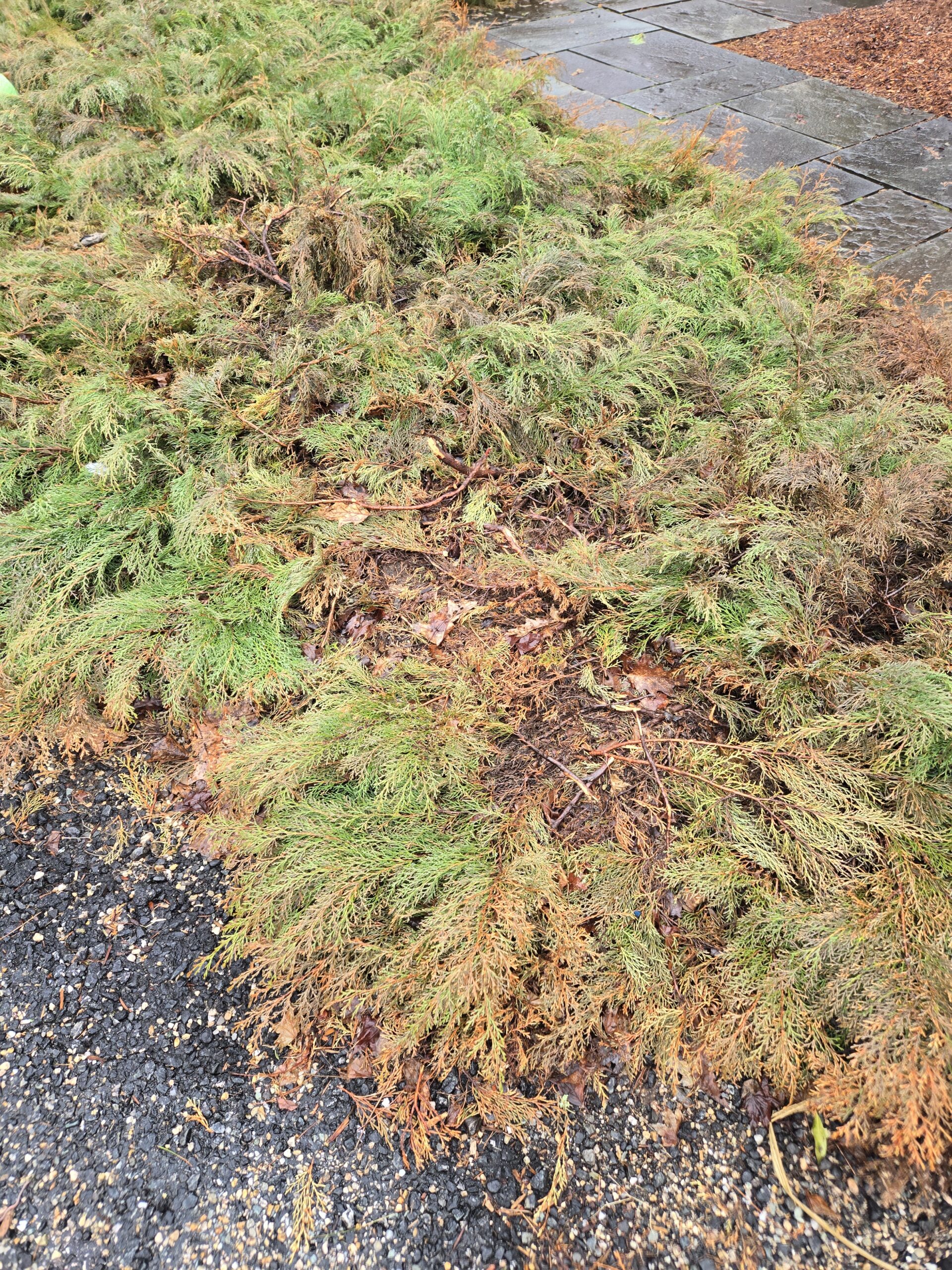
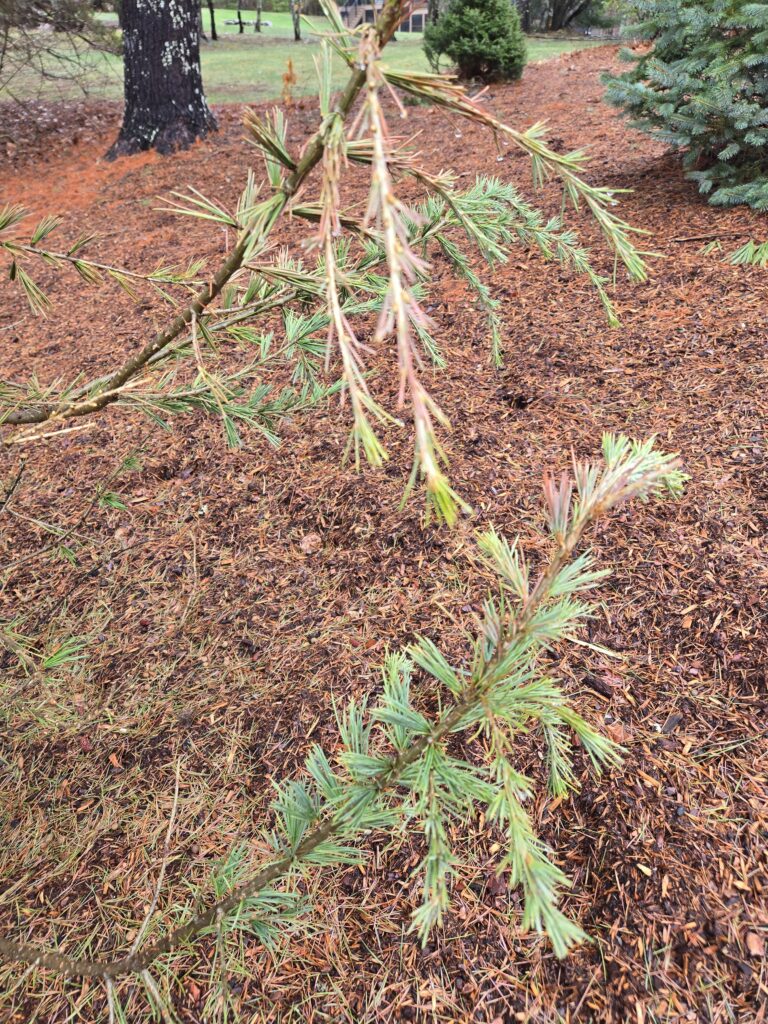
After our first “real” winter in quite a few years, we’re starting to see some things we haven’t seen in quite some time. With the persistent snow cover this past season, plants experienced a different set of stresses—and now that things are thawing out, the damage is becoming clear.
Winter damage can show up in several different ways. Here are a few of the most common issues we’re seeing right now, along with what to look for and what to do next.
Rodent Damage to Stems
We are seeing a noticeable increase in rodent damage in 2026. With deep, consistent snow cover, mice and other small rodents were able to stay active all winter, living in snow tunnels protected from wind and cold.
Take a close look at the base of your shrubs and trees—especially within six inches of the soil line. You may notice chewing on bark and stems.
- If less than half the stem’s circumference is damaged, the plant will typically recover over time
- If more than half is damaged, recovery is uncertain—but it may still be worth giving the plant time
Wind and Sun Burn
Bright sunlight reflecting off snow combined with drying winter winds can cause burn on evergreen foliage.
This usually shows up as yellowed or browned needles. In most cases, this is just cosmetic, and new growth will fill in and cover the damage.
However, in more extreme cases:
- Stems may be damaged
- You may see dieback
The best approach is to wait for new growth, then prune out any dead stems.
Broken Branches and Stems
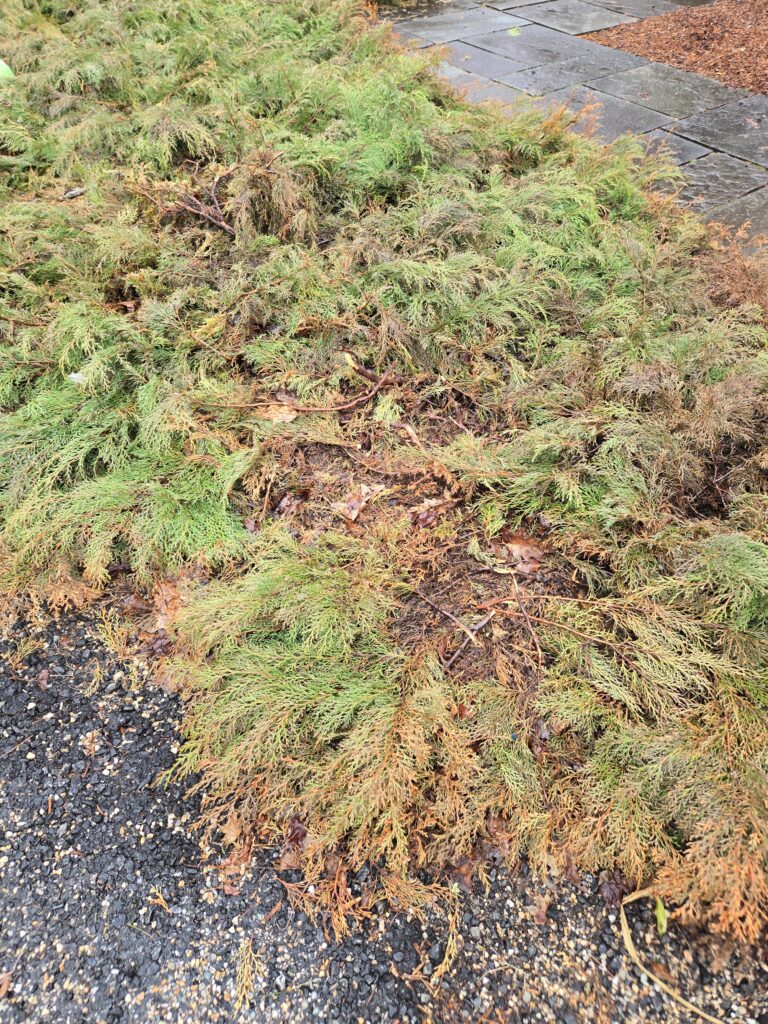
Heavy snow loads—and even snowplows—can cause physical damage to plants.
If you notice a single brown or damaged stem, this is often the culprit. Follow it back and prune below the break to encourage healthy regrowth.
Deer Damage
Need we say more?
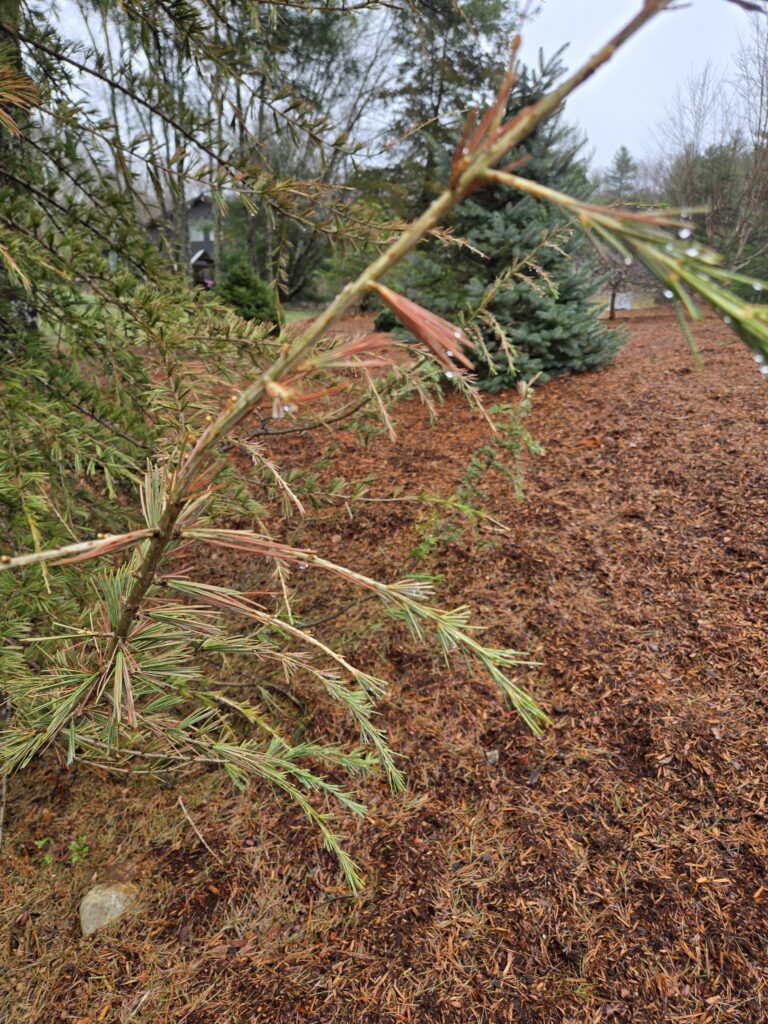
As we always say—when deer are hungry enough, they will eat anything. And after this long, snowy winter, we’re already seeing a surge in deer damage.
We’ve had customers surprised to find significant damage on plants that had never been touched before—even long-established arborvitae hedges.
Signs to look for:
- A clean horizontal browsing line around 5–6 feet high
- Torn or shredded-looking branches
What to do:
- Prune out damaged areas to promote new growth
- Keep in mind: deciduous shrubs recover more easily than evergreens
- Once consistent warmth arrives, fertilize to support recovery
- Stay on top of watering as plants begin actively growing
If you’re noticing damage in your landscape and aren’t sure what you’re seeing, feel free to reach out—we’re happy to help you assess and come up with a plan for recovery.
Here’s to a strong start to the growing season!