
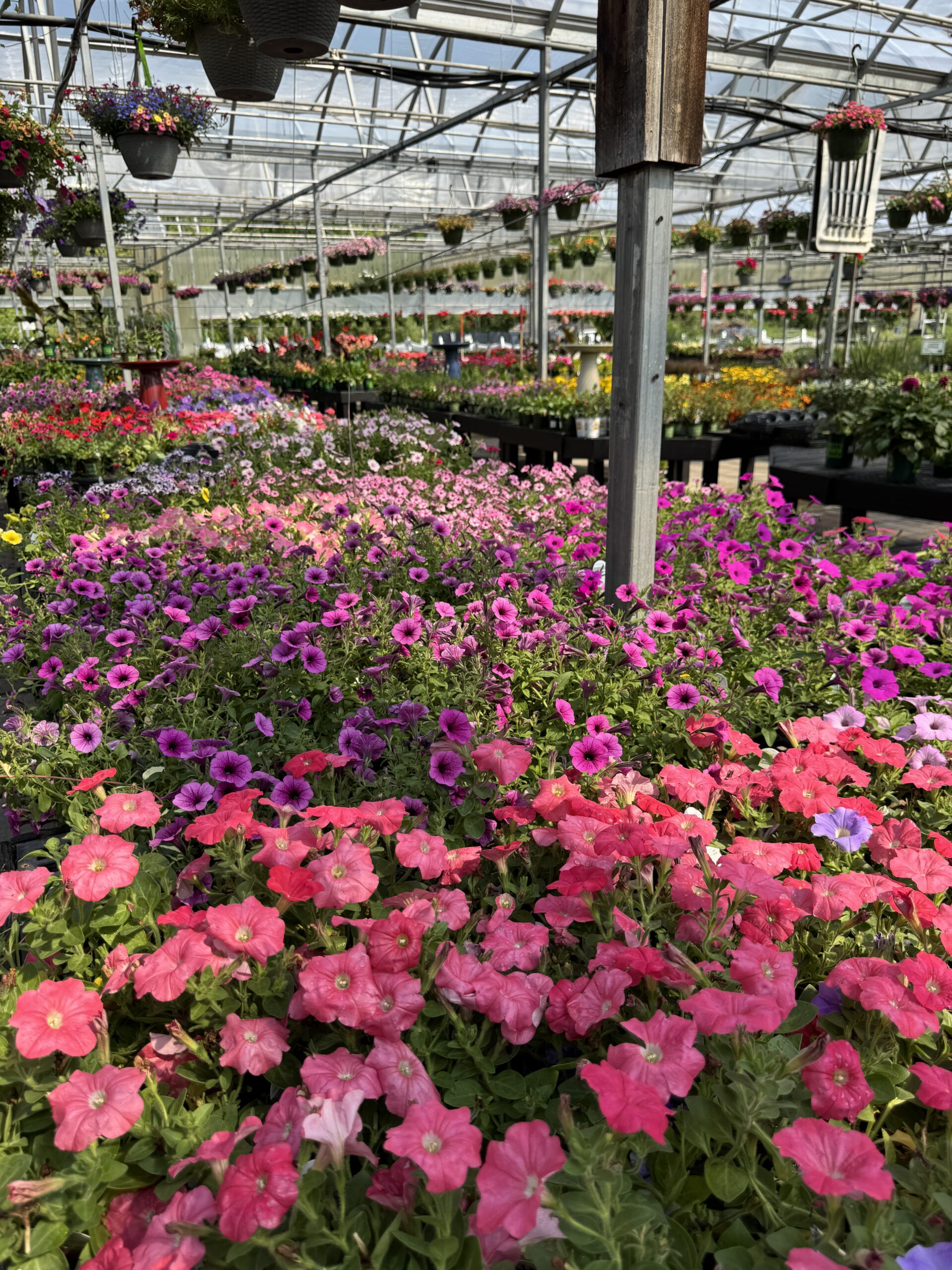
One of the questions we hear all the time at Burnett’s is:
“What can I plant that will give me color all season long?”
It’s a great question — and the answer usually starts with understanding the difference between annuals and perennials.
Both have an important place in the garden, but they do very different jobs.
If You Want Color All Summer Long, Think Annuals
If your goal is steady color from late spring through summer and into fall, annuals are usually the answer.
Annuals are the plants that give you that big, bright, season-long show. They are perfect for porch pots, hanging baskets, window boxes, patio containers, garden beds, and anywhere you want instant impact.
The tradeoff is that annuals do not come back year after year. You plant them fresh each season. But the good news is that, with the right care, many annuals are designed to keep performing all season long.
At Burnett’s, we grow and carry so many beautiful annuals for summer color, including favorites like:
Coleus, petunias, calibrachoa, begonias, impatiens, geraniums, lantana, verbena, marigolds, salvia, zinnias, sweet potato vine, and more.
Some annuals are grown for flowers, while others — like coleus and sweet potato vine — bring color through their foliage. That means you can build a container or garden bed with color, texture, and interest even when something is not actively blooming.
The key to keeping annuals looking their best is regular care. Annuals in containers need consistent watering, fertilizer, and occasional trimming or deadheading to stay full and fresh through the heat of summer.
If You Want Plants That Come Back, Think Perennials
Perennials are different. These are plants that return year after year when they are planted in the right place and cared for properly. Their roots survive from season to season, even if the top growth dies back in winter.
Perennials are a wonderful investment for your garden because you do not have to replant them every year. But here’s the part that sometimes surprises gardeners: most perennials do not bloom all season long.
Instead, perennials usually bloom during a specific window. One plant might bloom in May, another in June, another in July, and another in September. That is why a perennial garden is all about planning.
To get color through the whole season, you want to choose a mix of perennials with different bloom times. This is called planting for a succession of bloom, and it is also helpful for pollinators because it provides flowers at different points from spring through fall.
The Best Gardens Use Both
The most beautiful gardens often use both.
Use annuals where you want nonstop color — front steps, patios, hanging baskets, window boxes, and high-visibility areas.
Use perennials to build the long-term bones of your garden — borders, foundation beds, pollinator gardens, cottage gardens, and spaces you want to improve year after year.
Together, they give you the best of both worlds.
A Simple Perennial Bloom Guide
Every garden is different, and bloom time can shift depending on weather, sun exposure, plant variety, and where you live. In New England especially, timing can vary from year to year.
But as a general guide, here are some perennials to think about for color throughout the growing season.
May Blooms
May is when the garden really starts waking up. Early-season perennials bring fresh color after a long winter and help bridge the gap between spring bulbs and summer flowers.
Look for plants like:
Bleeding heart, creeping phlox, columbine, iris, salvia, allium, brunnera, and early peonies.
These are great choices if you want your garden to feel alive early in the season.
June Blooms
June is one of the most exciting months in the perennial garden. Many classic favorites start blooming, and the garden begins to feel full and colorful.
Look for plants like:
Peonies, baptisia, catmint, salvia, coreopsis, yarrow, dianthus, foxglove, hardy geranium, and early daylilies.
Peonies are especially loved for their late spring to early summer flowers, while plants like catmint and salvia can help create a soft, colorful border.
July Blooms
July is when summer perennials really begin to shine. This is a great time for pollinator-friendly plants, bold color, and flowers that can handle warm weather.
Look for plants like:
Coneflower, black-eyed Susan, bee balm, garden phlox, daylilies, liatris, lavender, Shasta daisy, Russian sage, and butterfly weed.
This is also a great month to think about butterflies, bees, and hummingbirds. Many summer-blooming perennials are excellent for adding life and movement to the garden.
August Blooms
By August, some early perennials have finished blooming, so it helps to have plants that carry the garden into late summer.
Look for plants like:
Hardy hibiscus, tall garden phlox, echinacea, rudbeckia, sedum, anemone, helenium, ornamental grasses, and late daylilies.
Hardy hibiscus is a summer favorite because it gives a tropical look but can return year after year in the right conditions. Some varieties bloom from July into September.
September Blooms
Fall color does not have to come only from mums. Late-season perennials can keep the garden beautiful while also supporting pollinators later in the year.
Look for plants like:
Asters, sedum, Japanese anemone, goldenrod, helenium, perennial mums, ornamental grasses, and Joe-Pye weed.
Late-blooming perennials are especially valuable because they bring color when many summer flowers are slowing down. They can also provide important late-season food for pollinators.
A Few Tips for Planning Your Perennial Garden
When choosing perennials, do not shop only for what is blooming right now. It is tempting, but it can leave you with a garden that looks amazing for two weeks and then goes quiet.
Instead, think about your garden in layers:
What will bloom in spring?
What will take over in early summer?
What will look good in late summer?
What will carry color into fall?
Also consider foliage. Some perennials are valuable even when they are not flowering because their leaves add texture, shape, or color. Hostas, heuchera, grasses, brunnera, and sedum can all help the garden look full between bloom cycles.
And remember: planting in groups often creates a stronger visual impact than planting one of everything. A drift of three, five, or seven of the same perennial can look more intentional and give pollinators an easier target to find.
Need Help Choosing the Right Mix?
That is what we are here for.
Whether you want nonstop color on your patio, a perennial garden that comes back every year, or a mix of both, the Burnett’s team can help you choose plants that fit your space, sunlight, style, and maintenance goals.
Bring us a few photos of your garden, tell us how much sun the area gets, and let us know when you want the most color. We will help you build a plan with plants that make sense together.
A beautiful garden does not happen all at once — it happens with the right plants blooming at the right time.
Stop in and let Burnett’s help you plan a garden with something beautiful happening all season long.